
Case study
View all

Datum asked me to shape the product direction, design foundations and team practices for their AI-powered developer platform.
The challenge
Datum was building a highly technical platform for cloud and AI-native builders, with a product spanning infrastructure, networking, DNS, AI edges, tunnels, metrics and developer workflows.
The challenge was to turn that complexity into a product experience people could understand, trust and use, while also giving the company the brand, design system and ways of working it needed to move quickly.
My project role
As Founding Designer, I worked closely with the founders, engineers and early customers to shape the product from the ground up.
I helped define the product direction, designed key workflows and interfaces, created the brand and visual identity, built the design system, and established the design process and tooling needed to support a growing team.
Activities
View all

Product strategy
User research
Brand identity
Creative direction
Product design
User experience design
User interface design
Design systems
Team building
Creating the foundations
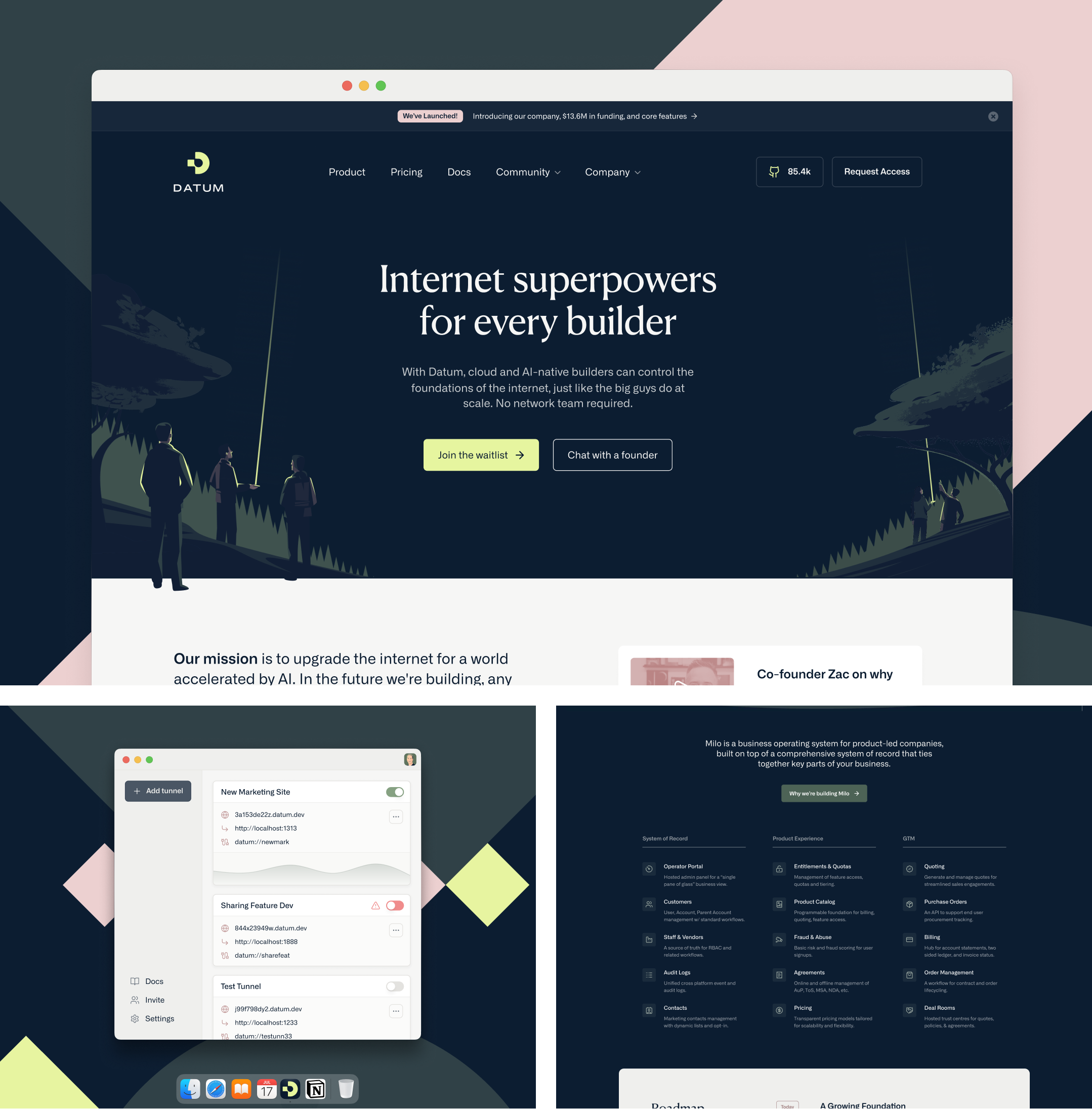
I started by helping the team turn a complex technical proposition into a clearer product and brand direction.
That meant working closely with the founders to understand the platform vision, the needs of early customers, and the areas where design could help make the product easier to understand, explain and sell.
From there, I created the foundations for a joined-up experience across the marketing site, product UI and internal tools. This included the visual identity, core design language, interaction patterns, component system and early product workflows.
Designing for technical users
View all
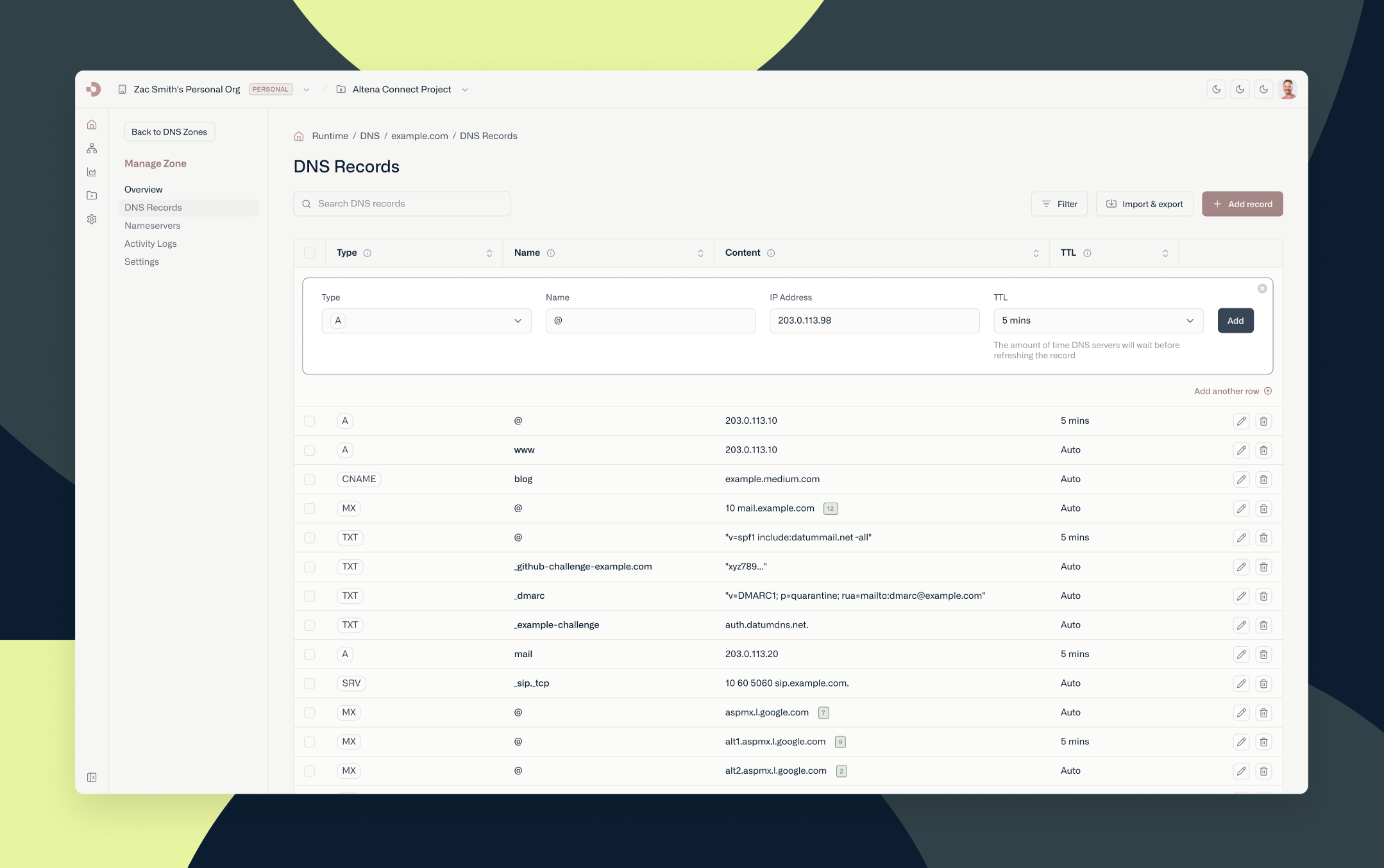
Datum’s users needed power and control, but they also needed the product to feel clear, calm and predictable.
I designed workflows for areas such as AI Edges, DNS, tunnels, domains, metrics, secrets and project settings, translating complex infrastructure tasks into interfaces that were easier to scan, configure and manage.
The work balanced technical density with usability, using clear hierarchy, structured tables, guided setup flows, strong empty states, validation patterns and consistent feedback across the product.
Building a scalable design system
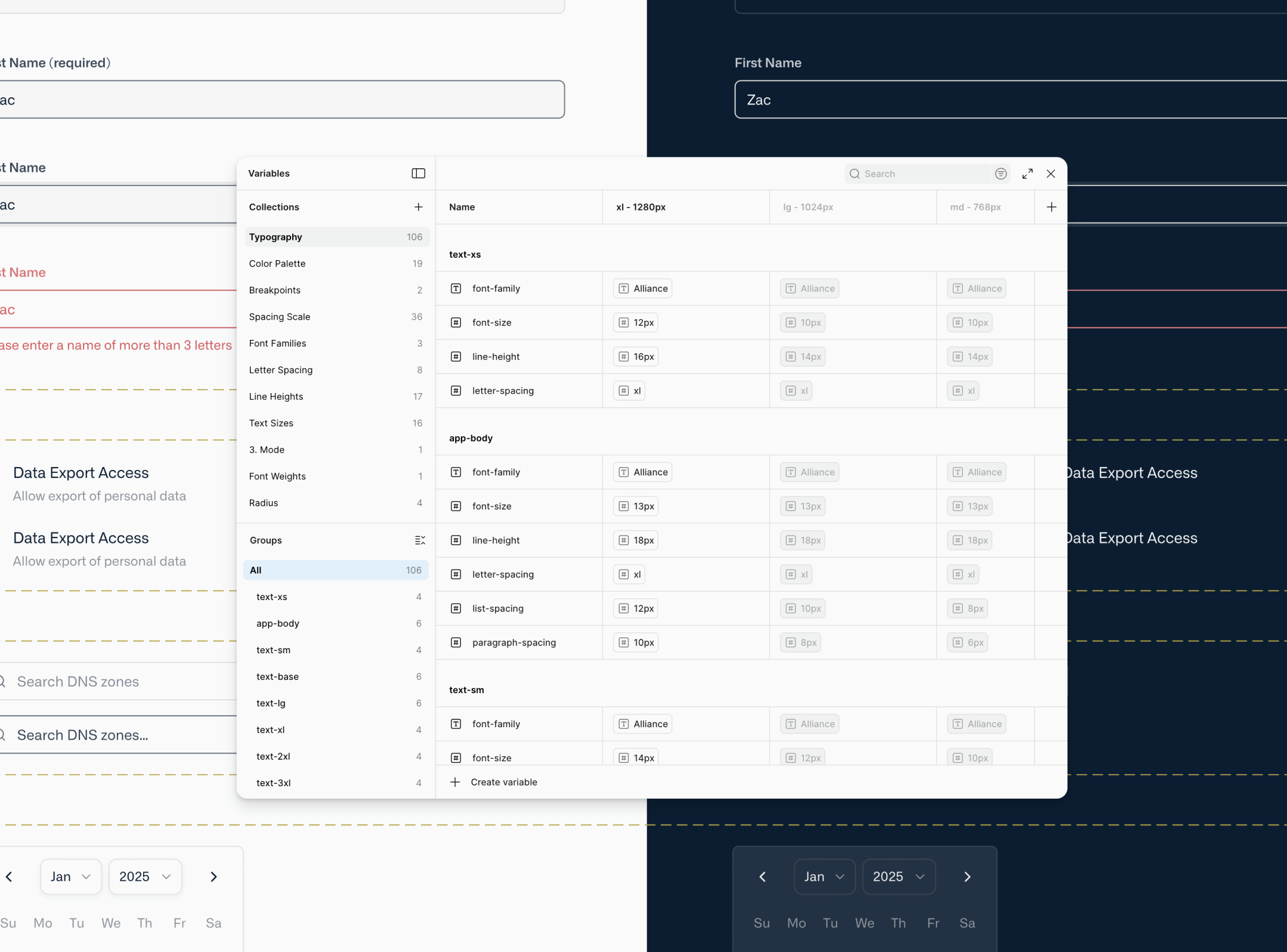
As the product grew, I created a design system that could support both speed and consistency.
This included typography, colour, spacing, components, states, dark and light modes, form patterns, tables, navigation, alerts, modals and product-specific UI patterns.
The system gave engineers a clearer route from design to build, reduced repeated decision-making, and helped the product maintain a consistent experience as new features were added.
Establishing better ways of working
View all
The testing focused on whether users could understand the purpose of each page, move through the journey confidently, find key information, interpret labels and calls to action, and understand what to do next. We also used AI tools to speed up the collation and organisation of session data, helping us turn transcripts, recordings and behavioural signals into clear findings in record time.
To understand whether the redesign was working in practice, I planned and ran a round of remote, unmoderated user testing across the service’s key audience groups.
I worked closely with the client throughout, creating a clear documentation trail covering the redesign rationale, proposed testing structure, research objectives and test script. This helped align the team before testing began and gave the findings a clear link back to the decisions we needed to validate.

Shared design and build tooling
Founder / engineering collab
Product decision-making
Design review structure
AI prototyping workflows
A scalable component system
Reusable workflow patterns
A lean design team structure
From early vision to launch-ready platform
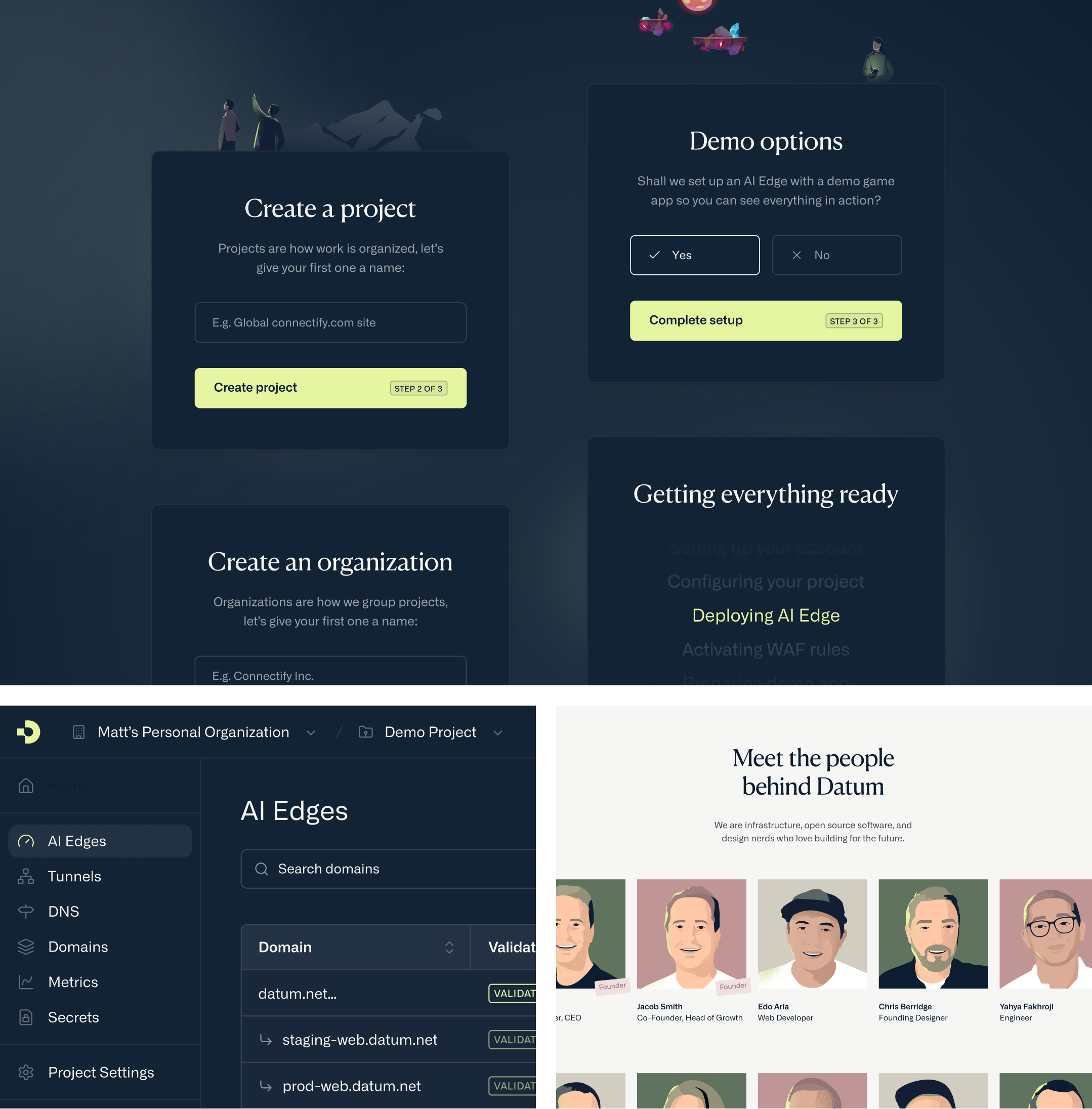
The work helped Datum move from a technically ambitious proposition to a product and brand that could be understood, used and sold.
By the time I left, the team had a clearer product direction, a stronger story for the market, a production-ready interface language and a scalable design system that could support future development.
The platform had moved beyond prototypes into a more complete experience across brand, marketing, onboarding and core product workflows, helping support early customer conversations, the public launch and Datum’s $13.6 million pre-seed fundraise.
Get in touch
View all
I’m available via chris@chrisberridge.com or LinkedIn.
Case study
View all
Datum asked me to shape the product direction, design foundations and team practices for their AI-powered developer platform.
The challenge
Datum was building a highly technical platform for cloud and AI-native builders, with a product spanning infrastructure, networking, DNS, AI edges, tunnels, metrics and developer workflows.
The challenge was to turn that complexity into a product experience people could understand, trust and use, while also giving the company the brand, design system and ways of working it needed to move quickly.
My project role
As Founding Designer, I worked closely with the founders, engineers and early customers to shape the product from the ground up.
I helped define the product direction, designed key workflows and interfaces, created the brand and visual identity, built the design system, and established the design process and tooling needed to support a growing team.
Activities
View all
Product strategy
User research
Brand identity
Creative direction
Product design
User experience design
User interface design
Design systems
Team building
Creating the foundations
I started by helping the team turn a complex technical proposition into a clearer product and brand direction.
That meant working closely with the founders to understand the platform vision, the needs of early customers, and the areas where design could help make the product easier to understand, explain and sell.
From there, I created the foundations for a joined-up experience across the marketing site, product UI and internal tools. This included the visual identity, core design language, interaction patterns, component system and early product workflows.
Designing for technical users
View all
Datum’s users needed power and control, but they also needed the product to feel clear, calm and predictable.
I designed workflows for areas such as AI Edges, DNS, tunnels, domains, metrics, secrets and project settings, translating complex infrastructure tasks into interfaces that were easier to scan, configure and manage.
The work balanced technical density with usability, using clear hierarchy, structured tables, guided setup flows, strong empty states, validation patterns and consistent feedback across the product.
Building a scalable design system
View all
As the product grew, I created a design system that could support both speed and consistency.
This included typography, colour, spacing, components, states, dark and light modes, form patterns, tables, navigation, alerts, modals and product-specific UI patterns.
The system gave engineers a clearer route from design to build, reduced repeated decision-making, and helped the product maintain a consistent experience as new features were added.
Establishing better ways of working
View all
The testing focused on whether users could understand the purpose of each page, move through the journey confidently, find key information, interpret labels and calls to action, and understand what to do next. We also used AI tools to speed up the collation and organisation of session data, helping us turn transcripts, recordings and behavioural signals into clear findings in record time.
To understand whether the redesign was working in practice, I planned and ran a round of remote, unmoderated user testing across the service’s key audience groups.
I worked closely with the client throughout, creating a clear documentation trail covering the redesign rationale, proposed testing structure, research objectives and test script. This helped align the team before testing began and gave the findings a clear link back to the decisions we needed to validate.
Shared design and build tooling
Founder / engineering collab
Product decision-making
Design review structure
AI prototyping workflows
A scalable component system
Reusable workflow patterns
A lean design team structure
From early vision to launch-ready platform
The work helped Datum move from a technically ambitious proposition to a product and brand that could be understood, used and sold.
By the time I left, the team had a clearer product direction, a stronger story for the market, a production-ready interface language and a scalable design system that could support future development.
The platform had moved beyond prototypes into a more complete experience across brand, marketing, onboarding and core product workflows, helping support early customer conversations, the public launch and Datum’s $13.6 million pre-seed fundraise.
Get in touch
View all
I’m available via chris@chrisberridge.com or LinkedIn.
Case study
View all
Datum asked me to shape the product direction, design foundations and team practices for their AI-powered developer platform.
The challenge
Datum was building a highly technical platform for cloud and AI-native builders, with a product spanning infrastructure, networking, DNS, AI edges, tunnels, metrics and developer workflows.
The challenge was to turn that complexity into a product experience people could understand, trust and use, while also giving the company the brand, design system and ways of working it needed to move quickly.
My project role
As Founding Designer, I worked closely with the founders, engineers and early customers to shape the product from the ground up.
I helped define the product direction, designed key workflows and interfaces, created the brand and visual identity, built the design system, and established the design process and tooling needed to support a growing team.
Activities
View all
Product strategy
User research
Brand identity
Creative direction
Product design
User experience design
User interface design
Design systems
Team building
Creating the foundations
I started by helping the team turn a complex technical proposition into a clearer product and brand direction.
That meant working closely with the founders to understand the platform vision, the needs of early customers, and the areas where design could help make the product easier to understand, explain and sell.
From there, I created the foundations for a joined-up experience across the marketing site, product UI and internal tools. This included the visual identity, core design language, interaction patterns, component system and early product workflows.
Designing for technical users
View all
Datum’s users needed power and control, but they also needed the product to feel clear, calm and predictable.
I designed workflows for areas such as AI Edges, DNS, tunnels, domains, metrics, secrets and project settings, translating complex infrastructure tasks into interfaces that were easier to scan, configure and manage.
The work balanced technical density with usability, using clear hierarchy, structured tables, guided setup flows, strong empty states, validation patterns and consistent feedback across the product.
Building a scalable design system
View all
As the product grew, I created a design system that could support both speed and consistency.
This included typography, colour, spacing, components, states, dark and light modes, form patterns, tables, navigation, alerts, modals and product-specific UI patterns.
The system gave engineers a clearer route from design to build, reduced repeated decision-making, and helped the product maintain a consistent experience as new features were added.
Establishing better ways of working
View all
Part of the role was not just designing the product, but helping design become part of how the company worked.
I introduced design processes, shared tooling, review rhythms and collaborative ways of working between founders, engineering and product. I also helped build a lean design team that could keep pace with the speed of the business.
This gave Datum a stronger design culture and a more scalable way to make product decisions as the platform moved from early prototypes towards a production-ready experience.
Shared design and build tooling
Founder / engineering collab
Product decision-making
Design review structure
AI prototyping workflows
A scalable component system
Reusable workflow patterns
A lean design team structure
From early vision to launch-ready platform
The work helped Datum move from a technically ambitious proposition to a product and brand that could be understood, used and sold.
By the time I left, the team had a clearer product direction, a stronger story for the market, a production-ready interface language and a scalable design system that could support future development.
The platform had moved beyond prototypes into a more complete experience across brand, marketing, onboarding and core product workflows, helping support early customer conversations, the public launch and Datum’s $13.6 million pre-seed fundraise.
Get in touch
View all
I’m available via chris@chrisberridge.com or LinkedIn.